Broken Processes, Made Faster.
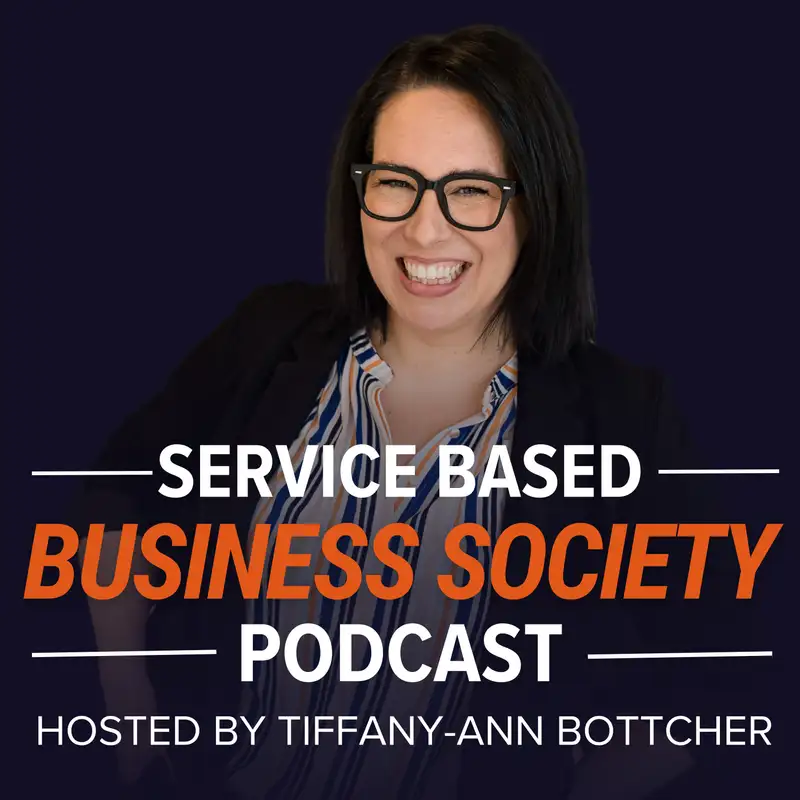
Download MP3Hello, and welcome to the Service Based Business Society podcast. I'm your host, TiffanyAnn Bottcher. I left the corporate world to build my own businesses, and along the way, I've learned that scaling isn't all highlight reels. It's messy, it's hard, and it's totally worth it. As a mom of three, the author of the data driven method, and a serial entrepreneur, I know firsthand what it takes to build something bigger than yourself.
Speaker 1:This show is where we get real about entrepreneurship. The good, the bad, the beautiful, and yes, even the ugly. Each week, I'll pull back the curtain to share stories, lessons, and strategies that help ambitious entrepreneurs scale their success. So let's get started. We are back.
Speaker 1:Welcome back to the Service Based Business Society podcast. I was starting to wonder if I was ever actually gonna get to say those words. Let's go back. Let's go back in time. Where have I been?
Speaker 1:What happened to the podcast? What's going on? I feel like it is a crazy time to be alive and it's exciting. It's amazing. It's overwhelming.
Speaker 1:There's a lot going on. So let's first go back last year just before Christmas. Now we have a whole plan for the podcast episodes laid out, launch plans, the whole bit. And we had one last episode before what was going to be kind of the holiday hiatus. Enter sickness
Speaker 2:and no voice. I had no voice.
Speaker 1:By the time I got my voice back, it was basically like the Christmas season. And it didn't seem like the right time to be recording and trying to get edited and all of that. So I thought, you know what? We're just gonna... It felt weird.
Speaker 1:It felt incomplete to just disappear. It's not my nature to not have closure for things like a wrap up, an end point, but it just didn't happen. And then started what I think has been the craziest year ever to be alive. And you might think I'm talking about politics, talking about economics, talking about I mean, all of those things are crazy too. But I think the highlight point here of the craziness that has been the amazing, overwhelming, incredible
Speaker 2:is the new technology, AI and all of the opportunity that has come with it. So last year when I got finished being sick and was in the process of getting ready to go through
Speaker 1:the holiday season, three kids, whole bit, like it's a busy time. And then started kind of speaker season, if you want to call it that. I attended multiple conferences, traveled across the country, spoke at multiple Intuit QuickBooks events. And I want to kind of share the piece that was so interesting to me is that the conversation shifted between the events. Now the Intuit Get Connected series is for industry professionals.
Speaker 1:So speaking at an event with industry professionals is a very cool experience because you're connecting with discussing some of the discussions that happen are incredible. Not always on this, like there's there's the great on the stage pieces, but I love the conversations that happen over lunch, over a glass of wine at the end, those types of things, because people are talking about what's really going on, what is happening in their businesses, what
Speaker 2:are they seeing their clients struggling with. The topic or theme of these events chosen by Intuit is
Speaker 1:really AI. Intuit has rolled out a whole bunch of new AI features into QuickBooks. And so they're ultimately sharing and promoting and doing those. Great event. Intuit always puts on a
Speaker 2:great event. I always think that anyone who puts on
Speaker 1:a really good conference like it is the elaborate, the planning, the details is incredible. The part that stuck out for me though, was at the first event, which was in Calgary, the one that I spoke at. The first one is actually in Montreal, but I don't speak French. So my first one, my time was in Calgary and the discussions about AI, how people were using it for their businesses, how their life, all of these things was one discussion. We had a lot of discussions about kind of this AI curious, you know, where are you in your AI journey?
Speaker 1:Are you AI curious? Are you using these types of things? Fast forward what I think was about six weeks later. And I'm having those same discussions in Toronto with other industry professionals and very different, very different discussions. The progression of adoption in just those six weeks was truly incredible.
Speaker 1:AI is now everywhere. Every software I believe has some kind of new AI feature. And I think the frustrating part from any kind of systems user is that what I see is a lot of these software companies adding AI because it's like the trendy thing to do and forgetting about everything else. I just saw a post in Facebook community for one of the softwares that we use every day. And someone's
Speaker 2:head, how about we get that filing feature fixed? It
Speaker 1:was supposed to get fixed long before the new AI features. And all we've seen for weeks is improvements to the AI features. And that's kind of the trend everywhere. Software prices have gone up because they're adding AI into them and ultimately some of it is amazing. Most of what I see from the in software AI options, not amazing.
Speaker 1:We can get more into that, in a little bit, but I think that that is the trend, the focus. And so for the last several months, I have been leaning in to growth. AI where it counts and learning all of these pieces. And so that's what
Speaker 2:I've been up to. I've been building, growing,
Speaker 1:doing things for my own business, for my team, for clients.
Speaker 2:And I just, it's been just
Speaker 1:a crazy time. And I truly feel like it's one of these pieces where there is a certain kind of runway for it being so new. It being so powerful, like it's evolving and changing every single day. One of the pieces that stood out for me was just the varying levels of knowing what's possible, knowing how to have your team using it safely, how to encourage people to use it in a way that added efficiency.
Speaker 2:All of these things. Now I have just been fully immersed, but it meant that some things had to give. And for a while it's been the podcast, but I'm super excited and I am happy to be back recording, back connecting. I've had a
Speaker 1:couple of people reach out and say like, hey, what's happening? I knew it was time to get back in the studio when the messages were coming in as in terms of, hey, what happened to your podcast? Been missing those episodes. And then people reach out asking like, hey, where is your stance on what is happening? It seems like a crazy time.
Speaker 1:And then I started to realize that as much as I had taken that time to really lean in and focus and do incredible, crazy, amazing things, it was also time to get back and kind of share what is happening because it is such a crazy thing that we really need
Speaker 2:to talk about. This concept of integrate, automate, delegate is really what captures everything that we have going on. So a lot
Speaker 1:of times people confuse integration with automation. And so I really want to kind of highlight the difference that integration means we're making two things work together or multiple things work together. So this could be a job management system communicating with a bookkeeping system. It could be a marketing CRM communicating with something else. It could be a booking platform that communicates with something.
Speaker 1:We've done some really cool stuff with some like short term vacation rental y kind of softwares. So lots of different pieces, but integration is making things connect and work together. And so it almost always saves time. It also reduces things like double entry errors. It means that information just flows from place to place and it doesn't wait along the way.
Speaker 1:So that is really whether it be on the marketing, the accounting, you know, the growth specific side. So key. The automating is really where that AI becomes very powerful.
Speaker 2:And so, you know, the amount of automation work we've done as of late, again, whether that's on
Speaker 1:the bookkeeping, marketing, consulting side, huge. And then we've got the delegate portion. For many, many years, we have assisted many of our clients with additional business support services. And so where we are deploying people from our team trained, supervised, managed by our team into someone's business to take care of tasks that they perhaps don't have time to do or they are looking to outsource to ensure that they happen more regularly. Oftentimes this is a great way to help scale a business.
Speaker 1:So it really comes back to that helping business owners scale their success umbrella in a number of different ways. So as we move forward through this season of the podcast, which we're going to dub a new season, season six, We're going to be exploring all of these different pieces in ways that can help you scale your success while still keeping your sanity. Because I'll be honest, it is tricky these days to do all of the things, keep up, keeping up with the Joneses as they say, and still feel like you're not running like from a fire,
Speaker 2:from a burning building all the time.
Speaker 1:My husband bless his heart recently said to me, why must we take so many things on at once? And I said, well, what do
Speaker 2:you mean? And he said, well, you've come up
Speaker 1:with these deadlines, but they're only your deadlines. And now here we are at midnight rushing to get it done for your deadline. And I said, because that deadline affects this project, which affects this, which affects that. And so this must be done now. And he said, none of those things must actually be done
Speaker 2:on those timelines. You just decided it. And I said, yes, I
Speaker 1:did. And he said, but why?
Speaker 2:Why is this important? And I could not
Speaker 1:answer it because in my mind, it only worked if we
Speaker 2:did it that way. He's a good sport. He really is a good sport.
Speaker 1:It all is part of a plan of how we move things forward. So choosing and deciding what really moves the needle in your life, in your business, in those moments is incredibly important because right now it is a ocean of opportunity
Speaker 2:and deciding which part of
Speaker 1:that you want to kind of cash in for you is a challenge. So, you know, I've leaned in for several months. Well, all of 2026 to date on learning, growing, using this technology. I've attended more conferences. I have worked with some incredible people.
Speaker 1:I have spoken on many stages, sharing the information that I have been learning and implementing. And now
Speaker 2:I feel like that season is evolving. September is always one of my favorite months of the
Speaker 1:year, not just because I love everything orange and pumpkin and whatnot, but because it almost feels like the mid new year. I've talked about it last September and probably the September before. It's that back to school. Everyone gets back to work. Does anyone actually take holidays in September?
Speaker 1:I bet that you could go just about anywhere and have like resorts to yourself because most people are away and so busy in the summer and then September hits and everyone's like, oh my gosh, I got so much to catch up on. I'm going to have to do all of the things. I have this whole list. I have all these ideas because I actually had a little bit of downtime in August and now I have had time to think about it. And so here we go.
Speaker 1:I see an increase in all of our client meetings. I see September is a bigger sales month for most clients that I reviewed books because everybody's like back engaged doing the thing. And so, it's
Speaker 2:that decision of what moves the needle in which season. So we're here. We're back on the podcast. I'm super excited. I am so pumped about some of the guests that we will be working with and sharing in season six.
Speaker 2:Season six sounds crazy.
Speaker 1:And I wasn't sure if we should like finish out the season five that kind of got, for lack of a better word, abandoned when I quite literally lost my voice and then got doing and focused on the things that move the needle this year. But I decided to go with season six. And the environment in which we are operating businesses and scaling success is different. Discussions of the future of roles. I've had a number of people say, well, bookkeeping is going to be replaced by AI.
Speaker 1:So then what are you going to do? And I always remind people that I myself personally don't actually do any bookkeeping at this point. Very little, very, very little because I have a team of amazing people that do bookkeeping and I do reviewing and advisory and all of these types of things. So I'm not personally worried. I will find things to do.
Speaker 1:However, of course, this is a conversation when you have built a business and I'm sure there are many of our listeners who feel that same way. Well, is what I'm doing going to
Speaker 2:be replaced by AI? Can some bookkeeping be done by AI? Yes.
Speaker 1:Can the process be done start to finish by AI at this point in time? No. Now there are many bookkeepers that it absolutely cannot. It's very interesting because when I was at these events and speaking and there's a lot of people that are like, why are we why are we talking about this? Why are we encouraging this?
Speaker 1:We don't want our clients to know that AI can help them. New splash. Everyone knows that AI can help them with things. This is not new. But I think that, know, and I, there's the number of people that come up on my feed as like content creators and stuff that are like, I automated everything bookkeeping.
Speaker 1:I'll send it to you. Here you go. I've been a little curious. I've been a little curious and I've clicked a few links. I got to know.
Speaker 1:Like what do they know that I don't? Can we record expenses into a spreadsheet? Yes, we can. Is that bookkeeping? No, it's not.
Speaker 1:First, we must know what the task actually is before we can do any kind of AI improvements, automations and whatnot. And I think that really is the piece.
Speaker 2:So if we kind of go back to that integrate, automate, delegate, I work with this incredible client and I... The president of this organization is very close to retirement.
Speaker 1:He is of a certain genre. And when we were hired to do a bunch of AI implementation, integration, process improvement, I was concerned that change adoption could potentially have some resistance. I could not have been more wrong. The piece that I learned in this project because I learned something from every business that I work with. The part that conceptual that
Speaker 2:I conceptualize with this was there was a
Speaker 1:time that he operated his business with no technology. We're talking, we looked up the addresses in the map. We wrote things on paper. We mailed them out. We're going back.
Speaker 1:And what has happened between then and now is that we improved things a little bit, a little bit, a little bit. We automated what was that little bit improvement over many, many years. Here's what I've learned. A lot of the processes that are currently being automated are broken processes that we've made faster. The key and working with this client was incredible.
Speaker 1:There's a few things that we were working through. Sometimes people are very visual when it comes to process. And so I find this to be a very helpful way. And we were mapping through this process and I said, how was this done before? And he's like, well, what do
Speaker 2:you mean? And I said, well, this seems very inefficient. And I think we can improve this process. I know we can improve this process. But I think
Speaker 1:that we need to really know that the process is the correct one before we make it faster. Because making a broken process faster isn't actually the upgrade that everyone will sell you that it is. So we went way back and we said, and I, so he walked me through this exact process. He said, well, we used to take this piece of paper and we used to clip it over here. And then it went to this and then you walk me through the whole thing.
Speaker 1:And I said, okay, let's automate that, that process. Let's not automate what this has become because this was kind of like the, you know, the house that has had so many additions, you know, you've got like a little tiny house and then they build like an addition and addition and addition. And you're like, it clearly wasn't well planned. Like, doesn't look like it was planned to be this big. That's kind of what we see with some of these processes is it's like, well, then we did this and then we did that.
Speaker 1:And then you can always tell because it's like, well, we went to this software and then so then you take it from here and you take it over to this thing and then this goes here and you're like, how did you even figure out
Speaker 2:that that would work? Well, because no
Speaker 1:one sat down and mapped it out that way. They sat down and said, okay, now we have this problem. How do we fix that? And they said, oh, you just do
Speaker 2:it over like this. Okay, well now we have
Speaker 1:a new problem and how do we fix that one? And so it's kind
Speaker 2:of that snowball effect. So we've ended up so learning and really conceptualizing this piece of like, first we have to break down exactly what we need to improve upon. What know you're going to, what is the objective? Why are we doing this task at all? What are the boxes we need to check?
Speaker 2:And only then can we really lay out a plan to integrate, to automate, to delegate, to do any of
Speaker 1:these pieces. And I really feel like that is the powerful piece. Knowing what you truly need, not what you think
Speaker 2:you need, not what your team thinks you need, but really digging in. I have another business that we're currently working with.
Speaker 1:They've grown. They've been doing things the same way for a very long time. The challenge that they have is that they're pretty committed to doing it the way that they're doing it.
Speaker 2:They have a big team. They have
Speaker 1:a big investment in the systems. They have a lot of moving parts. The problem is they're really reaching the capacity and ceiling of what that process and infrastructure can do. But moving it all is very overwhelming and daunting. So they just haven't.
Speaker 1:They just haven't. They're staying. The problem is we're seeing costs increase. We're seeing profit dilute because of inefficiency. We're seeing all of these pieces.
Speaker 1:And so we're trying to do little things. We're back to that like little adjustments, little fixes. And so now we've stacked like a 100 little fixes this business has to get minor improvement. And now they're looking at the year ahead and thinking, oh, I need
Speaker 2:to make a bigger improvement. What else can we do? And the problem is to get
Speaker 1:the actual effect that they're looking for. Nothing.
Speaker 2:They need to redo. They need to rebuild because in the time that this has happened, life has changed.
Speaker 1:The opportunity, the availability has changed. There are times in business for small minute improvements and changes. Course corrections, I like to call them. I always think about it as we're driving a boat across the ocean. We know we're going to a specific place.
Speaker 1:I mean, at one point you're in
Speaker 2:the middle of the ocean and you can't see land in any direction And you got to check and make
Speaker 1:sure you're still on course based on little coordinates and
Speaker 2:this and that. But if you just drive,
Speaker 1:if you're just like, okay, we're going. The chance of you actually making it across the ocean with zero point of reference and ending where you want to go, highly unlikely.
Speaker 2:We need to check minor course correct. Check minor course correct. That's very important.
Speaker 1:But we also, and I've talked about that on
Speaker 2:the podcast before. The part though that we must also do to the environment we exist in. We must also be willing to make the big change. We must be willing to capitalize on the new opportunities. We must be willing to look and evaluate because some people just got, Nope, we haven't even talked yet.
Speaker 2:Nope, we can't do that.
Speaker 1:We can't change. We've done it this way always. Those who will be most successful in the current life climate
Speaker 2:are those willing to look at things they would have never looked at before. You don't have
Speaker 1:to take every opportunity because you looked at it, but you do have to be willing to look at it
Speaker 2:because here's a few things. Here's a few key points that are very important in today's book. Number one, those who are willing to take the risk
Speaker 1:and the chance on something crazy
Speaker 2:will win. Because here's what we know. Here's what
Speaker 1:we know about being successful in the current
Speaker 2:life environment. Your imagination and imagination is kind
Speaker 1:of a strange word because I
Speaker 2:think fairy tales and whatnot. But your ability to think bigger, to demand better of yourself, your business, your team, what's possible will change everything. Working on
Speaker 1:a project right now and it started with, do you think
Speaker 2:it's possible? I'm going to answer almost every question. That question. Yes. In today's environment, tech, AI, automation, global talent.
Speaker 1:Is it possible? Yes. I mean, everything is possible for the right price.
Speaker 2:But I think the difference is it was possible before, but it
Speaker 1:was cost prohibitive and it was time consuming. And I think now the ability to hit pause on certain things and say,
Speaker 2:I have a problem.
Speaker 1:I need to fix it. So we're working with this
Speaker 2:with this one client on a solution.
Speaker 1:And it started with, like I said, I wonder if this is possible. Well, yes, it was possible. So we dig in
Speaker 2:and we get started. And it's like, well, if that's possible, what about this? Sure. Well, what about this one? What has evolved from a number of, I wonder if is something truly industry revolutionizing.
Speaker 2:Revolutionizing? It's revolutionary
Speaker 1:to the industry. And that same piece could actually revolutionize a number of industries. Here's the thing within that organization, there is someone who has been a part of rolling it out. Their contributions from a how we build it, how we imagine it standpoint are invaluable and incredible. However, the implementation has been slowed because that person is pulled in other directions and not prioritizing this.
Speaker 1:It's very hard to put something on hold and deal
Speaker 2:with something else when they're both important.
Speaker 1:So in this particular example, we've got an entire piece that could revolutionize the business, could change lives. It could change... Crazy.
Speaker 2:The person tasked with testing it while they're doing their job too busy to do so. Had another conversation with a different business owner struggling to make payroll cash flow. Not so great. Don't have time to get the invoices out. What do
Speaker 1:you mean? We don't have time to get the invoices out. Of course we need to get the invoices out. The invoices have to get out so that people can pay them. So the money can get into the bank so that we can pay the team.
Speaker 1:But in the moment when you are tasked with an emergency, both these people in two very different roles, very different things. Both of these people know the value and importance of what they're supposed to be. The invoicing, the tech testing, both of them
Speaker 2:know it's important. Both of
Speaker 1:them know it can change things for the better. But when that phone call, when that email, when that client comes up and says,
Speaker 2:oh my goodness, So the invoicing was like, well, I keep having team members call in sick and I keep having to cover them. The other ones also it's
Speaker 1:hard. The cost of not just rescheduling the client and going and covering them is that like your entire team might not get paid. You will not sleep for the next several days because you will be dying under the weight of stress. Wondering if enough people will pay their invoices in time so that
Speaker 2:you can make payroll. I said, unfortunately, there is no job that you can attend and cover that is more important than getting the invoices out. Now you may say, why doesn't someone else send
Speaker 1:the invoices out? I get you. I get you. That whole delegate. Right?
Speaker 1:Integrate. Automate. Delegate. There is always a process of getting there. There's a reason why delegate is at the end.
Speaker 2:And that is because many owner operated businesses. I see you all.
Speaker 1:The business operates in the owner's head. Who are the clients? Who is Beth? With no email and no phone number. Who is that?
Speaker 1:Who is that in your... What address? What do we do for Beth?
Speaker 2:No idea. But you know who does know? The owner. That quoted job. What's going to be included in that quote?
Speaker 2:Well, the database, the owner. That is the tricky piece.
Speaker 1:It's very hard no matter how talented the solution is, whether it is tech, whether it is human, whether it is a combination of if all of the information lives in your brain, no one can help immediately. It is a process to extract that information and put it in a place that makes sense. And there almost always is a residual chunk of things that we don't really know how to fix. It just doesn't really it doesn't line up.
Speaker 2:It's the have these clients been invoiced? It does not look like it. I think they have. Are we sure? Because we
Speaker 1:can't find the invoice. Oh no, she definitely paid me. There is this residual. The faster you can get through the residual, the faster you can get through the testing, all of these things, the faster you get to the, let's call
Speaker 2:it promised land of calm.
Speaker 1:Being a business owner in today's climate
Speaker 2:means you must have the ability. I was thinking about this as I was driving to go on a... We went on one family, all family vacation this summer.
Speaker 1:It was a road trip to a destination and then kind of a road trip with a couple of stops on the way back.
Speaker 2:If you have not been to Silverwood in Idaho, I highly recommend it. It's incredible. But we're off,
Speaker 1:we're going and it is a long drive, long drive to get there for us. And so lots of thinking time driving, doing my thing. Right. And my husband's taking turns. I drove all the way down.
Speaker 1:He drove all
Speaker 2:the way back. Lots of time to think. And I
Speaker 1:was driving through some areas that had had some terrible forest fires this summer. If you are not part of the Western Side Of North America and I'll be honest, I don't know as much about in other areas, but in our area, forest fires have ripped through cities, towns. It's been absolutely horrible. And there was this, there was, I was listening to them talk about the controlled burn and is this forest fire under control? And I kind of got to
Speaker 2:thinking that business ownership ultimately right now is kind of like the forest fire.
Speaker 1:Being a business owner is like having your very own forest fire. There are times where they let it burn out. There is the control burn. There is the we can't actually solve that.
Speaker 2:We just need to evacuate the city.
Speaker 1:There is the we're gonna cut a try. Mean, I'm clearly not an actual firefighter, but there's only so
Speaker 2:many firefighters. Right? And at times they know something is burning and it is not the biggest fire.
Speaker 1:Or maybe it's large, but it is not as close to town or it's not as easily solved. I don't know how they decide when it comes to fires. I would imagine it's life and property and there's some kind of order much like triage at the hospital, much like, but the business owner must be able to know something is smoldering and keep going on what they are supposed to be going on. It is the ability to evaluate all of the fires and determine which requires your personal firefighting attention and then determine are there other firefighters that could perhaps be called in? I know that when we were having the fires, we...
Speaker 1:Many firefighters, I think from Mexico, South Africa, like all of these people, amazing people come and help us to put out the fires anyway. So can we delegate the firefighting? Not sure.
Speaker 2:We have to evaluate that. Can we automate the firefighting? Can we integrate right now more than ever before? We must be willing to know something is smoldering, focus to build a much better solution and trust that the bigger, better solution will make up the difference and come through
Speaker 1:in the end. That concept can revolutionize your business because the building of the solution is insane. It's crazy. It's so powerful. And so to say, okay, I know that's a problem.
Speaker 1:I know we got a problem there. I am just going to quickly ignore that and create the solution that solves that problem forever. For the rest of time, that problem will be solved instead of just taking all of my time to apply many band aids to this one, and then that same problem happening two weeks from now, three weeks from now, a month from now.
Speaker 2:But you must then dig in. You know, it might happen at midnight. I think that there was a real trend for a while with the anti hustle movement.
Speaker 1:I am not anti hustle. I am let's make hay while the sun shines, let's dig in, let's do big things. It's not for everyone. I am an acquired taste and I'm okay with it. But the business owners that are successful right now are the ones who are also
Speaker 2:digging in. I met with a client at like 11PM this week. They're in the same time zone as me. Oftentimes I
Speaker 1:do weird times to accommodate time zone issues because I'm on the Western Side Of North America. So I am always, if we do, digressed. This client is the same time zone as me. And we still met that time because that is when the magic could happen. Someone will say that's crazy.
Speaker 1:Why would you do that? I thought she was successful already. I thought she was like, yes. There was, there's this piece of like, it's your business. You design the hours.
Speaker 1:Don't do these crazy things anymore. Like when I started my business, I thought I was going to take,
Speaker 2:I wasn't going to work Fridays. I met with someone this morning and
Speaker 1:he said, I don't, it reminded me because I, he's like, oh, I don't, I don't work Fridays. And I kind of stickered to myself because I was like, I remember a time when I thought I was not going to work Fridays. And now I'm like, I'm going to work Fridays. I work a lot. I love what I do.
Speaker 1:There is no time to just put my feet up and hang out because we're going to make hay while the sun shines. We're going to do the big things. We're going to cash in on the opportunities. We are going to do crazy, incredible, cool, amazing things.
Speaker 2:And I love every second of it. If I am not working, is to do something for my family. That's it. I do family. I do business.
Speaker 1:And I picked up
Speaker 2:a new hobby. My husband said I needed a hobby. I now have a hobby. I do three d printing. I have a three d printer.
Speaker 2:I print all the things. Now I had wanted a three d printer for a while.
Speaker 1:But when I reorganized my office, I realized I could print all of the drawer organizers I wanted custom sizes, perfect fit. Then I bought one. Then I bought another one. So now I
Speaker 2:have to. So business, family, well three d printing and a little bit of
Speaker 1:the home DIY just to balance it all out. But like, that's it.
Speaker 2:So if you're here this season, it's going to be a good one.
Speaker 1:We will be sharing the tangible tips. Some of the actual solutions we're building. Because I think that more people just don't know what is possible. So let's talk about what's possible because even if that exact solution doesn't work for you, maybe you're like, well, wait a minute. If that's possible, I wonder if.
Speaker 1:Do not put your I wonder ifs on the back shelf in 2026 and 2027. You got to drag them out. You got to
Speaker 2:see because now's the time.
Speaker 1:Guys, thank you so much for joining us for season six episode one. Super excited to be back. Can't wait for all the amazing guests we're going to
Speaker 2:have and to share all of the incredible opportunities and life. So until next time.
Speaker 1:That's all the time we have for today, but the conversation doesn't stop here. Be sure to subscribe to the Service Based Business Society podcast on all of your favorite apps. And if you're hanging out over on YouTube, search for Tiffany and Bottcher. Your likes, comments, and shares don't just help the show, they help more entrepreneurs find the real stories and strategies that they need to scale. Until next time, keep pushing, keep building, and I'll catch you in the next episode.
Creators and Guests