Why Your Business Gets Harder Every Time It Grows, with Michael Walsh
Download MP3Hello, and welcome to the Service Based Business Society podcast. I'm your host, TiffanyAnn Bottcher. I left the corporate world to build my own businesses, and along the way, I've learned that scaling isn't all highlight reels. It's messy, it's hard, and it's totally worth it. As a mom of three, the author of the data driven method, and a serial entrepreneur, I know firsthand what it takes to build something bigger than yourself.
Speaker 1:This show is where we get real about entrepreneurship. The good, the bad, the beautiful, and, yes, even the ugly. Each week, I'll pull back the curtain to share stories, lessons, and strategies that help ambitious entrepreneurs scale their success. So let's get started. Welcome back to another episode.
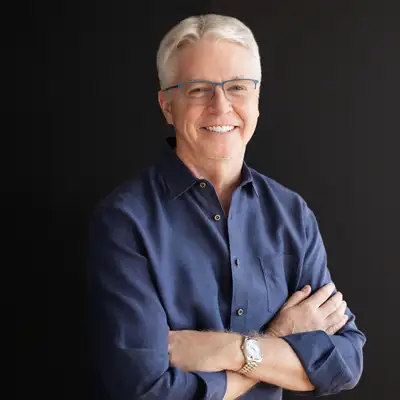
Speaker 2:Here's something nobody tells you when you set a revenue goal. The business that gets you to 1,000,000 is not the same business that gets you to 5. It might have the same name, the same owner, the same values, but almost nothing else survives. My guest today has spent thirty years watching that same process happen. Michael Walsh is the founder of the Walsh Business Growth Institute based in Vancouver, BC.
Speaker 2:And he works with service based businesses built on the expertise of their owners, trades, professional firms, supply and install companies. He's also the author to one of my favorite most recently read books, Freedom by Design, The Established Business Owner's Guide to grow, make an impact, and find the joy again. Michael says there are danger zones as you grow. 2,000,000, 5,000,000, 10, and that long stretch between twelve and twenty. Each one has a different problem hiding underneath it that you can't see while you're in it.
Speaker 2:We're gonna get into why your best producer is usually the wrong person to promote. Why 71% of managers think they're in the top 20%. And the math that explains why a 50 person company feels impossible to run when a 10 person company felt easy. If your business has grown and somehow gotten harder, this one's for you. Welcome to the show, Michael.
Speaker 3:Well, thanks. And thanks for having me here.
Speaker 2:It's lovely to have you. So I'd love to dive in and learn a little bit about how you got started in your line of work. I find the journey of entrepreneurship and and business ownership very, very fascinating. I find everyone's got their own unique journey and story to share.
Speaker 3:Okay. Well, mine started a minute or two ago. I was I've now been in this business for thirty years. And before that, was in financial services where we were helping people with investment planning and tax planning and things like that, including the investment planning around their business and stuff. And I ran into a situation where we actually helped one couple, who's a vice principal of a school, and his wife was an administrator in the same school.
Speaker 3:We actually helped them by putting them into an investment in real estate, and they got some tax gains available, and they got those. Out of the 30,000 taxable tax that he had withheld on the Canadian equivalent to a W-two as a T-four, so he had it on that. This was in Canada. Then we did back to back returns on him. He 27 of his $30,000 back.
Speaker 3:He was thrilled about that. Charged him $1,500 on top of that for the back to back tax returns. He was all happy. Next year he comes back and he said, Well, can you take care of our returns again? And I said, okay.
Speaker 3:Well, the investment you're in is still ticking along. It's doing really well. It continues to kick out that same tax savings this next year. So again, on... I think it was 31 that year, and again, we got everything but 3,000 back, and sent him a bill for his tax returns for $1,500.
Speaker 3:Again, this is a husband and wife back to back returns, and he complained. And he's like, 1,500? I could have done this with TurboTax. I said, well... Well, actually, the time, was into it, but but, you know, the equivalent of that.
Speaker 3:And I said, okay. Well, that's what we charge. And, like, you just did save, like, 20 some odd thousand dollars in tax. He says, yeah. But you did that last year.
Speaker 3:What do you got new for me? Like... You know? And I thought, okay. What got very clear to me very quickly was it's very difficult to save people more tax than they pay.
Speaker 3:Absolutely. If you put them in a higher yield investment, it's also got higher risk, and sometimes people lose their money. But if you could teach people how to sell more, they keep paying me more. There's no lid on that one. So I'm like, yeah.
Speaker 3:I think we'll go more into the business side of it. And I started with outsourced sales support, sales management, and things like that, and then moved into different aspects of what it takes to help people grow companies consistent with their goals and commitments in life. What we do is we actually focus on service based businesses, and we specialize in areas where it's based on the expertise of their owners, and that's whether it's professional services or whether it's skilled trades or whether it's people with a supply and install arrangement, so it's a combination product and service, things like that. But the thing they have in common is they all want to grow in service of some goal or commitment they've got in their lives.
Speaker 2:Absolutely. You know, that's very interesting. Your journey is not really much unlike my own. I mean, I left the corporate space, and originally my background is in accounting. So, but I thought originally I thought there's, there's a million bookkeepers out there.
Speaker 2:I hadn't done the books in my own corporate role in many, many years. And so I was like, definitely wasn't going to leave my, you know, I was like, I was myself was not going to be the best bookkeeper. And I thought, I don't really want to do that. And so I thought, you know, I'm going to get into the operations. I was VP of finance and tech, so I was going to lean more on the tech side than the finance side when I started my business and do more tech implementations, bringing in operational systems and these types of things.
Speaker 2:And I thought I had never sold a thing in my life. So I said, you know what? This is no problem. I'm going to sell the same way I always sold it in corporate to the CEO. And it's like, if we can prove positive ROI, we're golden.
Speaker 2:This is my black and white brain. Right? And so, I very quickly realized that it was very hard to show positive ROI in a business because people's books were such a mess that we didn't have any numbers to work on. How on earth would we be calculating optimized efficiencies and whatnot when the books were in absolute disarray? So that is how we ended up.
Speaker 2:And so I thought, okay, well, I'll fix the books, then we'll do this. And so we did, you know, we did definitely do that quite some time, but the bookkeeping, the need for good numbers, you know, just continued and exploded. So we have kind of distinct parts of our business now, but, know, it is very interesting when you're talking about, you know, what is that next thing? What is it's like you did that for me last year. And I remember really leaning into some of the sales pieces of my business when I started.
Speaker 2:And these marketers would come in and say, well, how much are you going to save them every week? And how much is this? How much? They really wanted to come back. As you were saying that it was a flashback to that moment where it's like everyone, you know, it's about flash and dash and the sexiness of like, what can we do and what can we save?
Speaker 2:And so, yeah, very interesting how that also shaped your your direction.
Speaker 3:Absolutely. And and I love what you're commenting on with the... You help them reorganize their financials first, and then you can actually, generate an... A return from that after the fact. Because the truth is until you've got clean numbers...
Speaker 3:I mean, the numbers done well will tell you the story of the business. Now, they don't tell the whole story, but they tell you a lot of the bare bones of the business, and if you can actually read that story well, you're set. Well, the numbers aren't up to date. There's nothing to read. And guess what?
Speaker 3:People are good at what they do. They didn't get in there to be good at math the bookkeeping side. Even if you go into management cost accounting or whatever else it is, that's not where their forte is. Their forte is in providing that service, whether it's, as you mentioned, a plumber or whether it's a drywaller or whether it's a stone person or whether it's an accountant or whether it's a lawyer or whether it's an engineer or an architect. I mean, there's so many different things.
Speaker 3:In fact, half the time I find that accountants themselves, they're so busy taking care of other people that they just assume that theirs will get sorted out, and they actually lose more heartache on their own than they do with with anybody else.
Speaker 2:Isn't that the truth, though? It's it's the cleaning company that their own house is... You know, they they take care of everyone's houses, and they get home, and they don't wanna... You know, it's like their own house. Or the mechanic who's been driving with the check engine light on for the last three months just hoping he gets to the shop in the morning.
Speaker 2:Because it's, you know, it's, it's ultimately business ownership is really about kind of fighting the biggest fire sometimes. And so sometimes, you know, I often joke about how, you know, sometimes we put a fire out and, know, it's still smoldering in the corner, but we just, you know, everyone has the same twenty four hours a day. And so, you know, sometimes depending on where you are in your scaling journey, if you don't have necessarily a giant, you know, a big enough team where you're in that process, sometimes it's, you have to kind of let a few things smolder while you fix something else and then go from there. Those, the numbers people often say, I'll get on a call with the business. Are you going to do the books?
Speaker 2:And I say, no, no, don't do the books directly. I have a whole team of do that. And I always think right person for the right job. And so it's, you know, those, the people who are doing books all day long, every day using the latest features and they're most efficient in that task. If you want to break down the numbers and look at the profitability of each of your plumbers and how we're going to drive that.
Speaker 2:And that's, that's where I step in. That's where I can provide the value. But it really is right person, right person, right job. So you decided to shape shift a little bit from finance and tax. I mean, there seems like there was some great value there in the tax and finance planning.
Speaker 2:And I, you know, I'm hearing your your sharing some of these numbers. I'm like, this is great. I'm sure he's super happy, but super happy. And then, you know, there's there's diminishing returns on that, that kind of happiness and tax savings. So you shifted into this new direction.
Speaker 3:Mhmm. And and, now remember that we're talking thirty years ago. Got it. May May, we actually had our thirtieth anniversary as a firm. And here's the thing that I found was that the excitement of what it is to be an entrepreneur, you know, is really cool.
Speaker 3:There's never a more exciting time in a business than when it's growing. There's also rarely a more precarious time in a business than when it's growing because you're, you know, outstripping all your structures, and you're you're, you know, you you're in a situation where you're like, Okay. The thing I find interesting is a lot of people actually go to structure. They say, Well, we got to use the structure. People come, people go, but your structures are here to stay.
Speaker 3:That's actually not true. Okay? If you take a look at what are the structures that are in a million dollar company? What are the structures in a $5,000,000 company? What are the structures in a $10,000,000 company?
Speaker 3:And what are the structures in a $20,000,000 company? Even if it's the same company at different stages of growth. Okay? So the structures you would use in a $10,000,000 revenue per year company are very different than the ones you'd use in a $1,000,000 per year company. Okay?
Speaker 3:In fact, if you take a look and you see what these different companies share, there's actually very little. I mean, they may have the same product. Sometimes even that morphs, but let's assume for a minute they have the same product. The second thing, they have the same value set, hopefully, but the values should be consistent if you still got the founder involved. A few of the key people, but not most of them, because at 10,000,000, you have a very different staff compliment than you had at one.
Speaker 3:Absolutely. Everything else has changed, including all your structures, because there's no way the structures of a million dollar revenue company are going to be the same as a $10,000,000 revenue company. They're completely different. So when people say, Well, focus on the structure, not... No, you're going to blow up those too.
Speaker 3:Here's the thing that I find. It's like you're dealing in different companies at each stage of growth. It's like, now I get a different company. It has a similar name, I've got the same values, but there's not a lot in common. It does get harder as you grow, but entrepreneurs get better at it as they grow as well.
Speaker 3:What I liken to it is a parent with a child. So DNA aside, somebody at age three and the same person at age 13 and the same person at age 23, they're very different. Okay? Absolutely. At age 13, you're supporting somebody who's struggling through whatever the dynamics of puberty are, and what are these zits anyway?
Speaker 3:How did I get them? Isn't like some... There's a lot of changes going on. Hormones are all different, and it's like, can't figure it out. At age three, you're trying to get them to put the right stuff in their mouth and keep the wrong stuff out of it.
Speaker 3:Yes. Eat the vegetables. No. Don't eat the sand in the sandbox. I mean, literally, there's a big...
Speaker 3:And at 23, you have a young adult, and and, again, they're dealing with a whole different level of stuff. But the thing that every parent knows is even though their child morphs into this different human being along the way, it's the relationship they have with them that allows them to navigate their way through these uncertain waters, especially if it's a first child you're dealing with with that. The business equivalent is exactly that, relationships. Because guess what? You're to have a different set of people.
Speaker 3:You're going to outgrow your structures. So the only things that you have are the relationships, and that's why the values and things like that are actually a critical part of it. It's not the whole game, but it's absolutely a critical core piece. One of the things that I find as business grows is if an entrepreneur can see a problem, they can usually fix it. If you can't see a problem, but you know it exists, you can still figure your way out to fix it.
Speaker 3:Problems that people get or they have difficulty with is if you can't see the problem, you have no idea it exists, even though you're caught in its grips. Those are the ones that are a little tougher. So the good news is that there's many ways to grow a business. There's as many ways as there are different people because we all have different skills and strengths. The problems are all similar.
Speaker 3:If you can actually identify what are these unseen ones, then that's the thing that I find that sort of overcomes impediments to growth. Absolutely. That's where I've actually evolved to participate with companies, I got to tell you, there's nothing more exciting than being able to be with people as they're growing their company and supporting them and actually sort of navigating their way around the traps that people otherwise fall into.
Speaker 2:It's very interesting because I was a part of a company that grew from... So before I started my business, we started and I think there was about four people. The business owner worked in a closet in this tiny little rundown office. And we had a couple techs. So I was, you know, the it was it was the wife and the wife's preschool friend was the two office people, and I was the third office person to join.
Speaker 2:And so we're talking grassroots. By the time I left, were doing over $1,000,000 a month in sales service based. There's a lot of people involved in that. And so when you're talking about kind of that growth and, and you know, we experienced so many parts of it in that ten years. And I feel like that was such a key part of my because you got to really see Kate, like you were talking about that, those first few set and growing.
Speaker 2:I think the holiday party is a wonderful example of exactly what you're talking about, because when you look at how that started, I think the first Christmas party was literally like, hey, we're going meet at a restaurant right at the biggest table they have. And there you go. Dinner's on us. Merry Christmas, everyone. Happy holidays.
Speaker 2:And then you go through the points where, you know, it's like then at one point it's like the the the vehicles would pick up all the team and bring them to this location. And it was like a wild party. Know, my husband is still with this company. It's, you know, fancy downtown, very, you know, it's at this giant hotel and you've got your buffet line and your one drink ticket because we don't want to get too rowdy. So, you know, and gone are the open bar days.
Speaker 2:And, you know, because we've, you've gone from, you know, small company to medium sized company. Like you said, not everyone is still there. And if I reflect back, I mean, I'm not. I'm not there anymore. And so, you know, it's a perfect example though, of, you know, there were people along the way that were so critical to that journey that were so fundamental part.
Speaker 2:But in the end, as things shifted, the new vibe didn't serve them. I can think back of one specific person who I think was like a key person. But at one point he said, this just doesn't feel the same anymore. And I was like, no, of course it doesn't feel the same anymore. I mean, when you came in, we were doing 100,000 a month.
Speaker 2:And when you leave, we're doing 1,000,000 a month. Like it's an entirely different animal. There's an accounting department. There's an HR department. There's department heads in terms of each of these things.
Speaker 2:There's a reporting structure. Now when he started, he had a problem. He called up the boss Saturday at 02:00 in the afternoon and said, buddy, we got to talk about this. It's different for the team. It's different for the structure.
Speaker 2:And I think kind of almost ignoring because sometimes people do it. They just keep running at the same thinking, why haven't we grown? Why can't we? People will have these kinds of revenue targets. I talk to business owners a What you want to do?
Speaker 2:Oh, I want to do a million dollars next year. Okay, do we have the appropriate team? Do we have the appropriate infrastructure? Do we have the are we ready to do a million dollars? Great.
Speaker 2:We're not ready, we can get ready, but let's not pretend that the same business that did 400,000 last year is going to do a million next year with... Without some pretty specific changes.
Speaker 3:Sure. Sure. And the thing that I find interesting about that is, you know, you talk about the million dollars. Seems that just about everybody wants that as their target. I want make a million dollars.
Speaker 3:Absolutely. I to make a million dollars. In fact, I worked with a woman in The UK, she had an e learning company, and their company had been sort of bouncing around between 250,000 and £400,000. Okay? So £400,000 is about 600,000 US, 700,000 Canadian.
Speaker 3:It was interesting because her goal, a million pounds. And so I ended up flying over there and we spent a few days looking at things together. Based on that, we agreed that, you know, there's common ground and stuff, so it was fine. We were two years into the... Like, the first four years...
Speaker 3:Well, from the year where they hit the 400,000, three years later, they had brought it to 2,000,000 in in in revenue. And it was interesting. I can remember the second year of that period of time, she was saying, you know, I gotta hit my million. I gotta hit my million. And I'm like, I recommend you let go of that goal.
Speaker 3:And she says, no, that's very important. Okay. So why, Michael, do you think I should let go of the goal? I said, because I just did an advanced thing on your numbers. You're tracking 1.4.
Speaker 3:You're already passed it. She's like, oh, yeah? That's cool. You know, my finance guy's never told me that because, you know, and he was just doing the big figures. Well, it's not the end of the year.
Speaker 3:I'll tell you how you do it the end of the year. And so that was fascinating, and it was interesting because the second book I wrote was based on her journey. And, in the first, you know, in the first period, she got to 2,000,000, and that's... We wrote the book. And then in the next four years, she brought it to 7,300,000 before, you know, at point, she'd sold it.
Speaker 3:But, you know, the other piece of this is when I met her, okay, when she was a 1,000, she was already 52, and she was a mom with three kids, you know, one of the adult kids was in the family, they had, you know, they had like six or seven different employees. By the time she sold it at, you know, at £7,300,000, she had 130 employees. Completely different animal. Absolutely. It's interesting because as people navigate their way through that, there's two things that happen.
Speaker 3:Not only do people outstrip their structures, but the other half of it is you have more people, and people start to understand this whole notion of herding cats. If you look at a little 25 person company, okay, and you count the number of one on one relationships in a 25 person company, that count is 301 on one relationships. If I go to a 50 person company, it's twelve twenty five relationships. And in a 100 person company, it's almost 5,001 on one relationships.
Speaker 2:Fascinating, hurting past....
Speaker 3:To mind. You know what I mean?
Speaker 2:Yes. You know, one of the pieces though, as you shift is your team has less connection to the... So as you add middle management, so, you know, let's use an example. You know, maybe your business deals with some kind of emergency service. So maybe it's a plumbing company.
Speaker 2:There's a flood in a bill that you got to go. At one point, the boss could call you up and say, hey, you know, we got this job. Can you make Saturday work? I know it's tough, but and some be like, know what? I'll make it work for you.
Speaker 2:And then sometimes you add in these middle management people. And so maybe they're great at many things, but their ability to call up the team and say, hey, you want to give up your Saturday? We need you. And someone's like, I know not really. Good luck.
Speaker 2:Good luck. There's... So that shift in relationships, you know, there's there to managing that many relationships and and how that can feel from the employee side and also from the business side can be very different.
Speaker 3:Well, the interesting thing about that is that probably the hardest single job in any company is a manager, the middle management. They got multiple bosses, multiple employees. Everybody's wanting something from them, and everybody's looking at... You know, they're like, what what what can I get? And you're, like, trying to just get the job done.
Speaker 3:And the other side of it is is that one of the biggest areas that business owners stub their toe is in promoting somebody to management. TiffanyAnn is amazing. She's this great individual contributor. She brings it across the line. Anytime she gives her words saying, It'll be done.
Speaker 3:Sure enough, it's done, and it's even done early, and to a standard a little above what I even expected, it's like, oh my gosh. I have... You know what? If there's somebody I'm gonna make the manager, I'm gonna make TiffanyAnn the manager. And then you walk in as a as a...
Speaker 3:With all the skill as an individual producer or individual contributor, and the truth is that everything associated with management is pretty much the opposite of what it takes to be effective as an individual producer. So what happens is that people think that I'm the boss. You're the employee. You should do what I say, and and I know more than you. You don't know as much as me.
Speaker 3:Well, that's easy. My solution to that is to tell you, and then you'll know. And literally, that's our logic. And here's what happens. The truth is that that 71% of all man...
Speaker 3:Okay. They... Gallup does all these studies, and one of the studies showed there was over a million employees and 80,000 managers interviewed. 71% of all managers put themselves in the top 20% of all managers.
Speaker 2:Oh, that's good.
Speaker 3:Yeah. And the question is, what's the biggest skill in management? The biggest skill... Like, you're not there to generate an individual result. They think, Well, the individual contributors are there to generate the result, and so I'm there.
Speaker 3:I'm accountable for getting a larger result that's the culmination of all of them. No, your job is not that. That's their job. If they weren't... So what happens is if you're trying to take over that, you'll either try to micromanage them or try to navigate it the way you think it should go, and if you're getting more people, it gets a little hairy.
Speaker 3:So as you strip your structures, you try to put new structures in to corral their behavior, try to get them to do what you want them to do, because they're just not listening, don't you know? So it's like, no, the job of a manager is to provoke thinking in the people that they work with. The reason that TiffanyAnn did this amazing job as an individual contributor is that you actually learned how to do it. You listened. You observed.
Speaker 3:You actually thought through processes, and you found ways to do it that actually make a difference because there is no rule book about this. You can claim there is, but it's in the nuance, not in the gross motor skills. Right? So what happens is if you get to the next role, your muscle memory is all around delivery and sharing with people what there is to do because it's based on expertise. But the minute you tell somebody what to do, you just shut off their thinking.
Speaker 3:So this is where you get a leader with a thousand helpers rather than people that are facilitating the growth of others. Now, doesn't mean you never tell them what they need to know, but it's got to be a dialogue and an interaction where the person's participating just as much as the boss is participating. See, we didn't always have the management systems we currently have. If you look before the industrial age, you know, everything was done by apprenticeship. So whether you're an accountant, whether you're a lawyer, whether you're an architect, an engineer, you know what?
Speaker 3:If you are the boss and I'm your helper, my job is to do all the Joe jobs, and your job is to teach me how to be a professional in that field. And that was... That's basically the social contract we had. Then what happened was the assembly line started to come out. And so journeymen and and other veterans would actually bring their apprentices with them, and then you might have 20 veterans each with their one to two apprentices on the same assembly line.
Speaker 3:Well, if they're all teaching them in their own pattern, which is their own unique way of doing things, you get a lumpy assembly line. So what happened is they actually gave managers the right to withhold information from the employees. You just get your part. Instead of learning six things, I get six people who each do one thing, and then we run this thing like a machine. And so this created the idea of a business as a well oiled machine, but there's a problem with a business as a well oiled machine.
Speaker 3:Okay? Well, actually, let's start with that. As long as the inputs are consistent and the outcomes are consistent, no matter how complicated algorithm is in between, you can break it down and have people do it. In a service based business, because guess what? We've grown beyond the industrial age into you know, information economy, and now we're into a network world.
Speaker 3:In fact, you know, some have said that we're actually in the pro... Pleading the... Because with AI, all the information that's available is available to any one of us, you know, for the cost of a chat GPT access or something. And so you're in a situation where in a service business, there's many ways to accomplish it, but there's also many ways to get the thing wrong, and you need the brainpower of everybody at the table. In the industrial age, somebody could hold a gun to you and say, Do this.
Speaker 3:Lift that rock. Put it there. Apply the assembly line this way or that way, and if not, I'll give you lots of punishment in whatever form it is. Yeah. In a service based environment, if they say, I'll give you lots of punishment, guess what happens to your brain?
Speaker 3:It freezes. It's like, I'm going to be in trouble in this. We just don't think very well when that's there, so what's happening is people actually have to treat their people nice. Now, what I find is as a company small, most people want to treat their people well, and they want people to treat each other well. It's just when you start growing past these different, what I call in the book that I've just published, is danger zones, what happens is that these underlying issues come up and they grab people, and nobody has any idea that they're there, but they're like, well, it must be because I've got more staff.
Speaker 3:Well, I gotta put in these constraining behaviors, and, you know, people don't wanna be controlled. So TiffanyAnn, you don't control the relationship with me. I don't control the relationship with you, and we're starting a business relationship, so nice to spend time with But there's this thing between us called the relationship, and you don't control it, I don't control it, but we both influence it. You can't control that relationship any more than you can control me, I don't really want to be controlled, and I suspect neither do you. It's something that you can influence.
Speaker 3:It's not something that you control. Now add that back to our 100 people company or even a 50 person company, a 50 person company with twelve twenty five individual one on one relationships. Is there any question at all why the seating plan at the wedding is so impossible? Because I can't put Jerry next to Mrs. Miguel Cuddy.
Speaker 3:She will talk as you're off, and I will hear about her for months. Can't do that. And then you're looking at all the different dynamics of who sits where. Okay? And that's why many weddings, not all, but many weddings are...
Speaker 3:Especially the larger ones, there's a lot more going on than people would like, if you know what I mean. Absolutely. So you're in a situation where, well, what if instead of putting structures that limit behavior or try to get people to do what you want them to do, what if you hired a little differently, but then when you get the people on board, then you actually look for structures and systems, as you outstrip the old ones, that support people to be at their best? So instead of how do I contain behavior, how do I actually support the people so that they actually are generating what they're committed to doing? If I've hired right, I'm dealing with people who actually do want to contribute.
Speaker 3:Not just there to punch a clock and and then leave. Those are the people we call didn't quite make the cut. You know? Right. So so with that, though, what you can get is there's a whole different level of effectiveness you can achieve and heartache you can avoid.
Speaker 2:It's really tough because in a... I think there's there's two pieces that make the the promoting the wrong people a real a real challenge. And and number one, it's that your go getters want to keep progressing. So if that is your top whoever, they want to feel like they have not, you know, if they don't want to feel like there's a ceiling there where it's like, okay, well, I'm your top tech or I'm your top producer. And what if I want to make more money?
Speaker 2:What if I want to continue to feel like my career is progressing? And so almost everyone thinks the next answer is I want to, I want to be a manager. I want to move up. I want to do these things. So it's like, don't want to lose your, your top person.
Speaker 2:You want to fulfill them. You want to make sure that they're, they're feeling good about what's going on. But then to the same effect, you take that person who maybe doesn't, isn't ready to manage in any way. And you've lost your top producer and you've gained a not great manager. And so now your company is actually losing on two fronts because instead of having someone who's ready to lead and may so you don't have that role really fulfilled, but you also the cost of that is you've also lost someone who was maybe fundamental in growing, who was a top producer, who could answer questions, who could mentor newer people, who could bring people.
Speaker 2:And so, you know, that that really becomes this kind of conundrum of how do you grow your business and hire the right people? You know, people maybe someone's been with you for eight years and they've been a keeper and they don't really want you to hire someone to manage them. They feel like they like working with the boss directly, and they, you know, wanna do these. And and so there's there's there's some people, and getting the people to conform to how the structure needs to grow to scale, that that can really be a challenge.
Speaker 3:Actually, it really can. You're absolutely right. Especially if a company has outgrown a person. Like, somebody might be very good at what they do, and if I'm part... If I'm one of the eight employees of a million dollar firm, service company, let's say, or seven employees plus the boss, whatever, I'm in a situation where it's like, okay, I have great access to the boss directly, but now they're 20, and I don't, You know?
Speaker 3:And and my boss is not as kind to me as the owner was. And they're not bad people, but they're just so preoccupied with getting stuff done that that I don't really get the same face time that I used to get with with the boss, and that is a very real dynamic. That's why the the whole conversation about who you hire in terms of managers is so critical. Because if I can... If I get promoted as a manager, my job is to support their thinking, support their growth, and set it up so that people wanna work with each other in a team environment where people have each other's back.
Speaker 3:As you get to bigger companies, you know, when you're talking about 1,000,000 a month as opposed to, 1.2 a year, a 100,000 a month, you're in a situation where too often what happens is people can no longer tie results to each individual. So what they do is they go to capability frameworks or competency frameworks, and they say, Everybody at this level has to accomplish these seven things. Well, now what I'm doing is I'm taking out the uniqueness of each person, and I'm actually trying to get them to be clones of each other, like a well oiled machine. Yeah. Okay?
Speaker 3:I like to think of something more as an intelligent ecosystem. If you can build your organization as an ecosystem, then it works. Ecosystem is a fancy word for just saying how people work with each other. I mean, so you can't... There is one always.
Speaker 3:The question is, is built on having each other's backs, having teams of complementary strengths as opposed to having everybody have to learn the same way? And I may believe in complementary strengths. I may be totally tied to that, love that idea, yet at the same time, I'm in a situation where, you know what? They want raises. I got to give them raises.
Speaker 3:I can't measure the results, so I'll use competency frameworks, but I totally believe in complementary strengths even while I'm putting in structures that will actually run at odds with that. I mean, that's not uncommon either. And you know what? If it's laid out that cleanly or that barely, everybody understands it, Nobody intentionally does that. This is some of the stuff that sort of creeps up on people, and they don't realize that that dynamic's occurred.
Speaker 3:They're like, Well, I look at how the big companies do. They do it all based on competency structures. But then again, employee engagement in most companies is really small, unless you're a little firm under about 20 people where everybody still gets along and does everything. Even when they get along in bigger companies, they're still using these layered systems because they think that systems are the cat's meow. Systems are critical, but I promise you, systems used to support people actually bring power to the one factor in your business that makes it big a single business, especially in a service based business, and that's the power of the people.
Speaker 3:And so if I can tap that and I can set up environments where people got each other's back, they're all able to bring their best in what they're good at. People say, Well, that's some sort of utopian woo woo thing. I don't know. No, it's the hard headed, bloody minded business profitability. It's called if people work together and they really appreciate working with each other and they're good at what they do, I'll get more productivity out of them.
Speaker 3:I'll have more money to give them raises. They really enjoy working with each other. They get meaningful work and meaningful relationships, and they're in a situation where everything goes better. It's just that at the surface, it looks scary to build an ecosystem, whereas a machine looks safe because at least I control that. Yeah, but again, if people don't want to be controlled, it's just a matter of time before you wear it.
Speaker 2:Yeah, think there's just all of these challenges that come together as you're scaling a business, there's the people and the process and all of it coming together and making sure that your team is ready to scale, and your team is ready to take on new challenges as we, as we shift into things. You know, the point that all of this information is available to anyone, if you're, if you look hard enough is ultimately changing the game. We're going to talk about your book in just a moment, but I had this call recently with a vendor and they offered a service for my own business that I was very interested in. They made it very hard to want to do business with them because they were, you must buy it this way. It must be this.
Speaker 2:You must do this. And I was like, I'm really interested, but this is really hard. And in the end they gave enough on the sales call that I between chat GPT and YouTube and this and that. That call will revolutionize my business. And in the end, I paid them nothing.
Speaker 2:Okay. Because I learned enough on the call to then figure out with some AI combined with some Claude and YouTube that I was down a rabbit hole. And I thought I actually would have because it's busy season. So I thought I actually would have been way happier to just pay you because you know how to do it. Right.
Speaker 2:And it's like great because we have gotten it faster probably because they do it all the time. But they made it so difficult to do business with them. And the information was all available that I... Then I figured it out myself. And so I'm like, you know what?
Speaker 2:That to me, that's crazy because ultimately it kind of comes back to that analogy. You can buy the water bottle at Costco for like 50¢. You can buy it, you know, at at the grocery store for a dollar 25, the gas station $3 or the airport for $15 you still buy the bottle of water. And so it it comes down to that. That shift will will change our business, every business with just more information available.
Speaker 2:You launched this book, which obviously talks about some of these pieces. Can you talk a little bit more about who people are listening to what we're talking about and thinking, oh, this is so interesting and could change my 2026 and beyond. So what kinds of things can people expect to to learn in in the book?
Speaker 3:Well, in the book, what I do is I I outline, the underlying hidden obstacles lurking beneath each stage of business growth. So for example, once somebody gets past their first million, their natural goal that they go for is 2,000,000, and if they hit 2,000,000 and go beyond that, then they look for 5,000,000, And then if they look... If they eventually get themselves up to 5,000,000, then they actually take a goal of 10,000,000. And then at 10,000,000, of course, the next natural goal is is 20. What I find is that there are...
Speaker 3:Around each of these different milestones, there are those hidden factors. So as you approach 2,000,000, things get a lot harder, and the conversation we're having around management starts to play. And that's one of the underlying issues that's there is people aren't quite sure how to actually introduce management in an effective way other than picking the best contributor and hoping it works, even if the skill set's not there. Then just after you hit five, like, if you can actually overcome the thing at two, you swim straight to five. Five's actually not that hard to get to because you could scale.
Speaker 3:But by the time you're at five, then there starts to be some creaks in the in the system that show up, and there are ways to overcome those. It's a completely different set of issues, but it's a combination of stripping different structures now combined with the fact that I've got more people at the table. Same thing happens between eight and ten million, and then there's this... And if you get through that one, then between twelve and twenty million... Between ten and twelve million, it continues to slide right up, and then you hit a wall.
Speaker 3:I've seen people with a 28 net income have it dropped to 6 and a half when they were 13,500,000, whereas at 12,000,000, they were at 28%. Then it's called the run for the roses. Now, this isn't a straight service based company. Between It's twelve and twenty. There's this chasm where you're too big for the smaller infrastructure.
Speaker 3:You're too small for the bigger infrastructure, so it costs more than you'd like it to. The key is to get yourself to 20 as quickly as possible. Now if I'm supplying and install products, whether it's kitchen cabinets, whether it's insulation project, whether it's stone and tile, whatever it is, I'm in a situation where there's product cost involved too. So the ratios are a little bit different as to which zone... I can get higher in terms of my revenue with fewer people.
Speaker 3:And really, if you take a look at it, it's a combination of the numbers of people plus the nature of the structures, and the structures change based on whether it's product or service companies. So the first part of the book I'm talking about, what are the underlying issues that actually stop people at each of those zones? What are the actual things? What does outstripping your structures look like? What does actually dealing with people at different levels look like?
Speaker 3:And the truth is that if you can identify four simple, okay, behaviors that everybody does, and we're all hardwired as human beings to do, then you can understand your people at a whole different level. Rather than scratching your head at their behavior, wondering what they did, you could actually start on, oh, that's why they did that. You know what? They've got a concern about this. Let's go deal with the concern, and all of a sudden those issues go away.
Speaker 3:I mean, it's fascinating to see that. And then the whole second half of the book is there's a framework that I provide on the people side of things, and, you know, I call it the freedom framework. And it... Because it allows people to increase their freedom in their business. They do more of the stuff they love.
Speaker 3:It increased their freedom from their business. They can actually have a life, have vacations, things like that. And freedom because of their business, whether it's the impact in the community, whether it's the impact with their teams, whether it's the impact, on themselves and their own financial well-being. You know, those are the three freedom levels that come from actually understanding that know your people as you grow are not your biggest threat. Okay?
Speaker 3:80% of all people or 80% of all problems in a business, once you're past about 20 people, 80% of them are people problems. Except people can also be your secret weapon against all the problems that you face. If you can just learn a little bit more about their behaviors, and you can work with them in productive ways, then all of a sudden everything works so much better, and people just enjoy their businesses more. There's levels of core satisfaction that are stronger. People are making more money.
Speaker 3:There's no question about that, and they're doing it in a way that they really enjoy their business. One of the things I love is when we work with somebody who's saying, you know, I can probably give this another year or two, and then I've got to hang up my colleagues. I've got to retire. Then it's four years later, and they're like, Are you kidding? I'm having so much fun.
Speaker 3:Don't want to leave. That's so cool. You know what? It's no fun if you're not making any money.
Speaker 2:Absolutely.
Speaker 3:Money is absolutely part of this thing. It's just not the whole part of it.
Speaker 2:Okay. Michael, what is the book called and where can people find it? Because it sounds super fascinating and I think so relevant to every business owner I know.
Speaker 3:Okay. Well, the book is called Freedom by Design. I've actually got a copy of the book here. That's what it looks like. It's a light blue thing.
Speaker 2:Love it.
Speaker 3:The Established Business Owner's Guide to Grow, Make an Impact, and Find the Joy Again. And that can be found on Amazon in whichever country you're in, we're all over it. We've got the print version, we've got the Audible version, we've got the Kindle version, so that's all there and it's going. Or you can just, if somebody wants direct access from me, just go to our website, which is walshbusinessgrowth.com, and we can take care of somebody there as well. One thing I will say is if somebody does want the book and because of the fact that they've listened to your podcast, anybody who identifies that they've listened to the podcast, they just send a note to infowalshbusinessgrowth dot com.
Speaker 3:And if they give us their name, their address, and we do need a contact phone number because delivery won't give it to them unless we get a phone number as well, we're happy to send out a free book.
Speaker 2:Wow. That's an amazing gift for our listeners. Thank you so much. That's...
Speaker 3:You're welcome.
Speaker 2:The book sounds fascinating because I think that no matter, you know, you're talking about the different journey and so key all those spots that they can find just growth and improvement. And I'm super excited to read the book. I can't wait.
Speaker 3:So Okay.
Speaker 2:Excellent. You so much for being here. And where can people follow you online? Where do you like to hang out and and give more content that that people might be able to to check out?
Speaker 3:Well, one place we're doing things right now is LinkedIn. K. So if you type in Michael Walsh Vancouver, you know, they'll... You'll find me. Walsh Business Growth Institute is our firm name, or you can just go to the website, walshbusinessgrowth.com.
Speaker 2:Well, thank you so much for being here. I think this episode has provided so much value for listeners and thank... Can't wait.
Speaker 3:Excellent. Thank you.
Speaker 1:Subscribe to the Service Based Business Society podcast on all of your favorite apps. And if you're hanging out over on YouTube, search for
Speaker 2:TiffanyAnn Bottcher. Your likes, comments, and shares don't just help the show,
Speaker 1:they help more entrepreneurs find
Speaker 2:the real stories and strategies that they need
Speaker 1:to scale. Until next time, keep pushing, keep
Speaker 2:building, and I'll catch you in the next episode.
Creators and Guests